

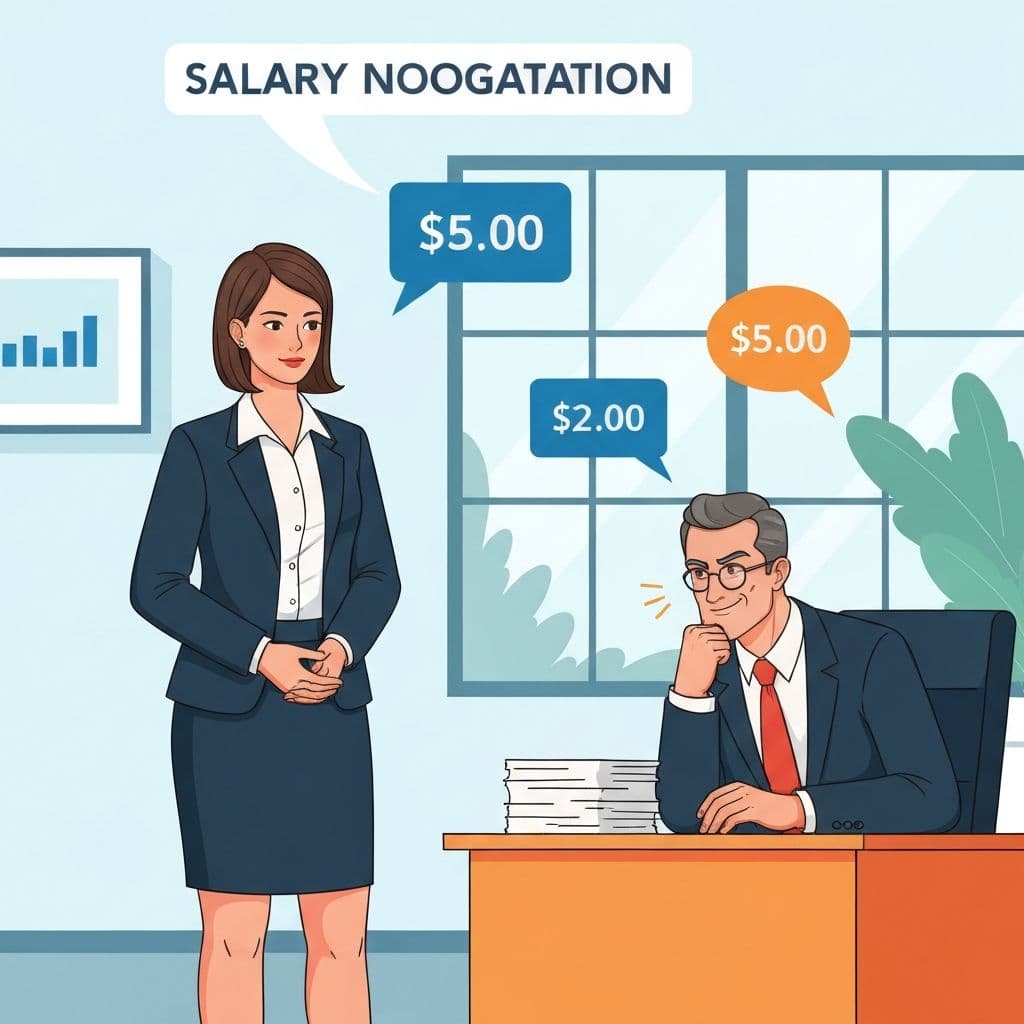
You got the offer. Congratulations! Now comes the part that makes most people uncomfortable: negotiating your salary. But here's the thing—failing to negotiate can cost you hundreds of thousands of dollars over your career.
Why You Should Always Negotiate
Most initial offers aren't a company's best offer—they're a starting point. Hiring managers typically have flexibility of 10-20% above the initial number. By not negotiating, you're leaving money on the table.
Data Point: In our analysis of 5,000 job offers, candidates who negotiated received an average increase of 16.2% over the initial offer.
The Foundation: Know Your Worth
Before you negotiate, you need data. Research salary ranges using multiple sources:
- Levels.fyi for tech roles with verified compensation data
- Glassdoor salary insights for your role and location
- LinkedIn salary insights from job postings
- Conversations with people in similar roles (ask for ranges, not specifics)
- Your own target based on financial needs and market research
Script 1: Responding to the Initial Offer
When you receive an offer, never accept immediately—even if it's good. Here's what to say:
"Thank you so much for the offer. I'm really excited about the opportunity to join [Company]. I'd like to take a couple of days to review the full package. When would you need a final decision?"
This buys you time without creating concern. Use this time to research and prepare your counter.
Script 2: The Counter-Offer
After reviewing, here's how to present your counter:
"I've given this a lot of thought, and I'm very excited about joining the team. Based on my research of the market and my experience in [specific relevant area], I was hoping we could discuss a base salary of [your target]. I believe this reflects both the value I'll bring and the market rate for this role. Is there flexibility here?"
Key elements: express enthusiasm, provide rationale, give a specific number, and ask an open-ended question.
Script 3: When They Say No
Sometimes the budget is truly fixed. Here's how to pivot:
"I understand the salary may be fixed at this level. Are there other parts of the package where there's flexibility? I'm thinking about [signing bonus / additional equity / remote work days / professional development budget / title]. What options do we have?"
Script 4: Handling Multiple Offers
Having competing offers is powerful leverage, but use it carefully:
"I want to be transparent with you—I have another offer I'm considering. [Company] is my first choice, and I'd love to find a way to make this work. The other offer is at [X]. Is there anything we can do to close the gap?"
Never bluff about competing offers. If you're caught, you'll likely lose both opportunities and damage your reputation.
What to Negotiate Beyond Salary
- Signing bonus: Often easier to approve than salary increases
- Equity/RSUs: Can represent significant long-term value
- Start date: More time between jobs for rest or preparation
- Remote work flexibility: Increasingly valuable and often negotiable
- Professional development budget: Shows investment in growth
- Title: Can impact future earning potential
- Performance review timing: Earlier review = earlier raise opportunity
Common Mistakes to Avoid
- Accepting the first offer without any negotiation
- Giving a range instead of a specific number (they'll always go to the bottom)
- Apologizing for negotiating or seeming desperate
- Making ultimatums or threats
- Negotiating over email when a call would be more effective
- Failing to get the final agreement in writing
"I was terrified to negotiate my first offer. Using these scripts, I increased my salary by $18,000. That single conversation has compounded over every raise and job change since."
Conclusion
Salary negotiation is uncomfortable because we're not used to advocating for ourselves. But with preparation, practice, and the right scripts, you can approach these conversations with confidence.
Remember: if you don't ask, the answer is always no. You owe it to yourself to try.